
1. North Star Village Context
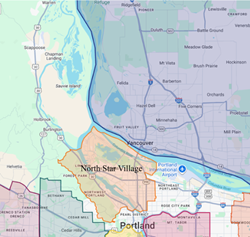
North Star Village is located in Portland, Oregon, serving the North Portland and close-in Northeast neighborhoods. Jan Lochridge, the Council Chair, led the deployment of the Hello Everyday devices for the village.
The village has approximately 80 members, with about three-quarters classified as social members and the rest as full members. North Star serves a population with a high percentage of members who live alone and female members. Economically, the membership is spread across the spectrum, mostly classified as middle class, though about 10 or 12 members receive membership assistance.
North Star operates as a largely urban village (covering areas up to the hills of Forest Park, including the town of Linnton) and utilizes a virtual office rather than a physical one. North Star had recently undergone a natural pivot toward being more social, having started as a very service-oriented organization. The village is currently operating in its North Star Village 2.0 phase, as most of the founding members have stepped back from positions of authority.
Village services include transportation to medical and other appointments, technical assistance, light yard work, housework, and social visits. North Star utilizes about 37 volunteers, coordinating service requests through a small team led by Jan.
2. Opportunity and Initial Reaction
North Star received a gift of 15 Hello Everyday sensors early in the product's development, making them one of the first villages outside of the pioneer tester, WLLO or West Linn – Lake Oswego Village, to receive the devices.
Jan was initially skeptical about the opportunity. However, the decision to participate was solidified after being impressed with the device's capabilities and the fact that 15 units were gifted to the village. North Star understood that Hello Everyday was a young company, viewing the participation as a partnership in development.
A small group, including Jan, Mary, and Barbara (council members), conducted initial beta testing. They installed the devices and shared notifications. During this phase, they experienced an alert when Mary went to the coast, leading the council members to realize the necessity of the vacation mode setting. This internal testing went well before the wider rollout began.
3. Deployment Strategy and Allocation
North Star pioneered its model for allocating the sensors. A key strategic decision was made regarding responsibility: North Star decided not to assume monitoring responsibilities due to concerns about manpower (requiring a consistent commitment to daily monitoring) and liability issues. They were also concerned that monitoring crossed over into "medical care," which goes beyond the village's mission. This decision was heavily influenced by the fact that North Star operates a virtual office and does not have the infrastructure of a volunteers that staff regular hours like WLLO does.
The criteria for members to receive a device included:
The devices belong to North Star and members can use them as long as they meet the criteria or need the device; a form or contract was used to establish this understanding.
North Star solicited interest via an initial email announcement detailing the criteria, followed by sign-ups at an event. The initial response led to 14 qualified people requesting the device right away, making a planned drawing unnecessary.
4. Implementation and User Acceptance
The deployment process was hands-on, led by Jan, who traveled to the members' homes to plug in the devices and help them set up their contacts. For most users, Jan filled out a printed intake form with the necessary information and later inputted it online, rather than having members use an iPad to complete the online circle creation form.
User acceptance was high with little apprehension. The ease of setup was noted as one of the most attractive features of the sensor.
Crucially, trust in the village was a major factor in adoption. The fact that the device was offered by North Star, a trusted partner, and provided at no charge, was instrumental in gaining quick acceptance. Jan noted that if members were purchasing it on their own, the response might have been different, especially since the product is new and emerging.
Regarding technological literacy, there was no significant pushback on technology issues. However, Jan found that the reporting aspect remained confusing for several people—specifically how to access reports and the requirement that a person must receive alerts to gain access to managing the device. This feedback later helped the company simplify its intake process by removing confusing choices about reporting times.
Users were instructed to call the company directly for technical issues, and reports indicated that Hello Everyday was providing good customer service.
5. Outcomes and Reflections
Post-installation, the device primarily blends into the background, which is the desired outcome, minimizing issues for both the users and the village.
North Star members who choose to share their data often select the middle option (sharing a daily text), as the contacts appreciate getting a daily notice confirming users are active. About two-thirds of the company's users generally select this option or the full hourly data sharing, while one-third selects maximum privacy.
Jan reflected that she wished she had better understood the relationship between the two alerts (the "up and around" alert and the daily report) initially to better explain it to members.
Looking forward, North Star plans to send a survey to existing users to understand better:
The deployment confirmed that the trust associated with the village's endorsement made people interested, and is expected to continue to help North Star’s evolution and focus on social connections.